The More Steps, More Care Assumption
A thoughtful skincare routine does not need to be long. Learn to give each step a clear job, spot duplication, and trim products without losing purpose.

The most common mistake in building a skincare routine is treating every extra step as evidence of extra care. A thoughtful skincare routine gives each product a clear job; otherwise, the cost is more time, more chances for discomfort, and a shelf of bottles whose roles are hard to explain.
To make a routine more deliberate, start with what you want it to do, then inspect the products already in use. Add or remove steps only after you can name the gap. This approach is less about pursuing a perfect sequence than making each choice legible.
What do you want the routine to do?
Begin with ordinary needs, not a trend-driven list. You might want to remove sunscreen and makeup at night, wash away sweat in the morning, or keep skin comfortable through a dry season. Write down the one or two outcomes that matter most to you now.
Keep the wording observable. “My face feels tight after cleansing” gives you a clearer starting point than “I need a better routine.” “I want makeup to sit smoothly” is more useful than collecting products because they promise a polished look.
Separate daily maintenance from a specific concern. A routine that removes the day and leaves skin comfortable has a different job from one that includes a targeted product. Naming the difference helps you avoid asking every bottle to solve everything.
What is each current step doing?
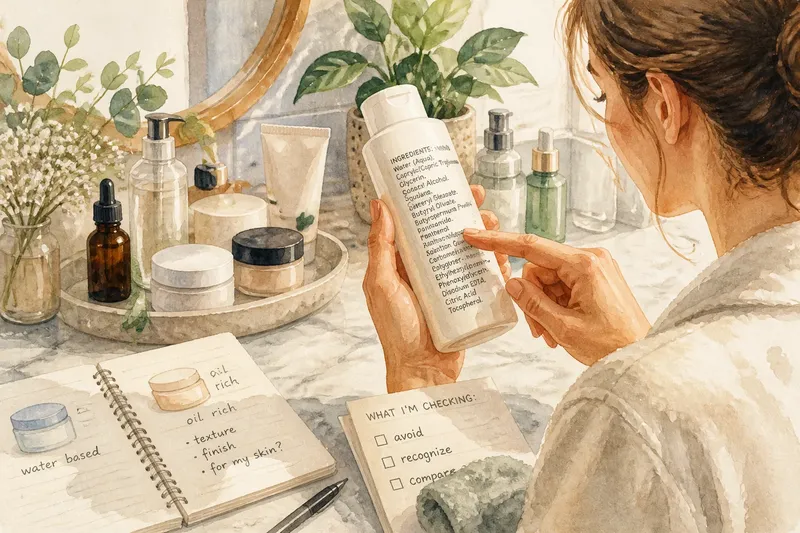
Set your products together and write a short purpose beside each one. A cleanser removes residue; a moisturizer helps reduce the feeling of dryness; sunscreen is intended to protect skin during daytime exposure. Other products may have a narrower role, such as adding hydration or addressing a particular cosmetic concern.
Look for overlap without assuming that two products with similar labels are interchangeable. A hydrating serum and a moisturizer may both support comfort, yet differ in texture and how you prefer to use them. The useful question is whether both contribute something you notice and value.
Check where and when a product belongs. An item used only on damp skin, before moisturizer, or at night may have a distinct place in your sequence. If you cannot recall its purpose or how it fits, pause before adding another product.
How do you find the missing job?
Now compare the routine with the needs you wrote down. If a need has no clear step, consider whether a product is necessary at all: changing when you cleanse, choosing a more comfortable texture, or using an existing product consistently may address the gap. A new bottle is one option, not the default answer.
Say you use a gentle cleanser and moisturizer at night, but your face still feels uncomfortable after washing. Imagine that you also have a fragranced toner and a serum, neither of which has a purpose you can name. Rather than adding another layer, you could set those aside and consider whether the cleanser itself feels too stripping; the observable result to look for is whether skin feels more comfortable after the existing routine, not whether the shelf looks fuller.
Change one thing at a time when you can. If you introduce several products together, it becomes difficult to tell which one suits you, which one is unnecessary, or which may be causing irritation.
How should you order the steps?
Keep the sequence simple: cleanse when needed, apply any targeted or lightweight product you have chosen, then use moisturizer if it serves your routine. In the morning, include sunscreen as the final skincare step before makeup when you use it. At night, focus on removing makeup and sunscreen before applying the rest of your products.
Texture can offer a practical guide: lighter, more fluid products are commonly applied before thicker creams. But a product’s directions may call for a different order, and some formulas are intended for particular times or combinations. Follow the product label or manufacturer’s instructions where they apply.
Not every routine needs a separate toner, essence, serum, eye cream, and face cream. If two products serve the same need and you prefer one, the other does not earn a place merely by appearing in a familiar sequence.
Which questions help you decide what stays?
How many skincare steps do I need?
There is no single number that suits everyone. A cleanser, moisturizer, and daytime sunscreen may cover the basic jobs you care about, while another person may choose a targeted product for a particular concern.
Can I use fewer products if my skin feels fine?
Yes, a shorter routine may make sense when it meets your needs and feels comfortable. Remove an optional product thoughtfully, then notice whether anything you value changes.
Should I add a serum before moisturizer?
Only if the serum has a purpose you want to serve and fits your preferences. Check its directions for placement, and avoid adding it simply because a routine seems incomplete without one.
What if a product stings or causes a reaction?
Stop using it if it causes a concerning reaction, and seek advice from a qualified health professional when symptoms are significant or persist. For a diagnosed skin condition or ongoing irritation, a dermatologist can help you choose an appropriate routine.
What is not worth the effort?
It is usually not useful to chase a complicated routine because a video, packaging, or product set presents it as the more serious choice. Nor do you need to audit every ingredient label in search of a perfect lineup when your immediate question is simpler: does this product do a job you want done?
A brief note on what you use and how your skin feels can make decisions easier, especially when you are changing one product. Keep the record plain: the product, its role, and any noticeable change. There is no need to turn ordinary care into a tracking project.
When should you reconsider the routine?
Revisit your choices when your needs, climate, schedule, or preferences change. A routine that works during a humid summer may feel different in heated indoor air; a new makeup habit may also change what you need to remove at night. Review the purpose of each step rather than rebuilding the whole shelf at once.
The more-steps-more-care assumption loses its pull when every product has to answer a simple question: what am I asking you to do? A thoughtful skincare routine is not the longest one; it is the one whose steps have a reason you can still recognize when the packaging and trends change.