From Kohl to Compact: How Makeup Became Portable
From kohl to compact, portable makeup changed how cosmetics were carried and used. Learn to read a case’s mirror, compartments, and refill design.
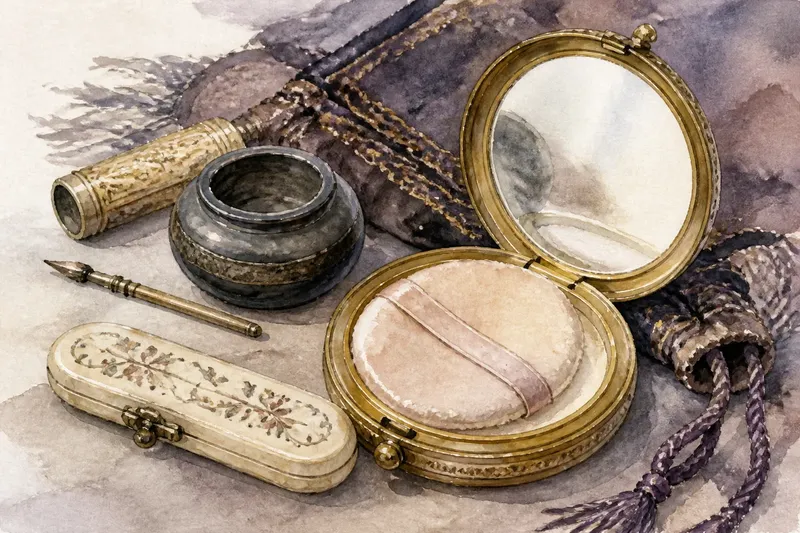
The familiar mistake is to treat a compact as a small dressing table; that overlooks what portability changed. From kohl vessels to hinged powder cases, portable makeup brought cosmetics and application tools into different kinds of containers, each with limits shaped by its design.
Rather than tell a universal story of progress, it helps to examine the object itself: what it holds, how it opens, and whether it includes a mirror or applicator. These features describe possible uses without assuming that every culture, period, or owner followed the same path.
What could early kohl containers do?
Kohl is a dark cosmetic used around the eyes in many cultures. Historical objects associated with kohl include small vessels and tubes, sometimes accompanied by slender applicators. The exact materials and forms varied, so a single container cannot stand for every tradition or period.
A narrow opening could help contain a powder or paste, while a pot made its contents accessible but might require a separate tool. A pouch or box could carry several pieces together, though the user still had to locate and manage them. These are practical differences visible in the design, not proof of a single, steady evolution toward the compact.
When examining a vessel, note whether it has an opening suited to direct access, a lid, or a separate applicator. Those details can support a cautious account of how the object may have been handled. Without reliable provenance or documentation, avoid assigning a precise date, maker, or cultural meaning based on appearance alone.
How did cosmetic cases become personal objects?
A case can be both useful container and valued possession, but claims about its material or social meaning need context. Metal, ivory, and decorated wood appear in the history of small personal objects; their presence in a particular cosmetic case should be established by examining that object, not assumed from a general account.
Decoration alone cannot tell us who owned a case, where it was carried, or whether it was used daily. A richly ornamented surface may invite questions about craft and taste, but answering them requires evidence such as a known history of ownership, maker’s marks, or a dated record. The object’s construction can still reveal practical features, such as a clasp or a compartment, without settling its social story.
Imagine a traveler with a powder pot in a fabric pouch and a separate mirror. If a maker joins those functions in one case, the traveler has fewer loose pieces to manage. The expected observable result is a more self-contained set of objects; the example illustrates a design possibility, not a documented historical event.
What did the hinged compact bring together?
A hinged case could combine a lid, mirror, cosmetic, and sometimes a puff or space for an applicator. Opening it provided access to several functions in one object. Designs differed, however, and the presence of a mirror or puff should be checked on the specific case rather than inferred from the word “compact.”
A mirror reduced the need to carry a separate reflective object, but it did not make every setting suitable for applying makeup. A person still needed adequate light, a steady hand, and a place where a brief touch-up felt comfortable. Portability expanded the settings in which someone could use a cosmetic; it did not erase social expectations or practical constraints.
Pressed powder also changed the relationship between product and case. A compact designed for a pressed cake could hold the powder in a fitted insert and provide a puff for application. That arrangement differs from a vessel for loose pigment, but the details of any particular product depend on its construction.
When could makeup be used beyond a dressing table?
A case small enough to carry could be opened in a shared setting, such as a train compartment, theater lobby, or workplace washroom. Those are possible settings, not evidence that every compact was used in public. A portable object makes an action possible; its owner’s habits and the surrounding social expectations shape whether that action occurs.
Observers might read a touch-up as practical, discreet, or conspicuous, depending on the setting. The same case could support different interpretations. Rather than assign one meaning to public grooming, distinguish what the object allows from what a particular person or audience may have made of it.
It is not worth ranking decorative motifs as if one pattern or material were the turning point. For understanding portability, the more useful questions are what the case holds, what it protects, and how its parts work together.
How did retail packaging change the compact?
When a cosmetic was sold with a case, puff, or fitted insert, the packaging became part of the product’s presentation. Some designs allowed the owner to keep the outer case and replace an insert; others tied the case more closely to a particular product. These arrangements are best described by looking at the specific fittings and instructions, where available.
A removable insert suggests that replacement may have been intended, but it does not by itself establish how long a case was kept or how often it was refilled. Likewise, a coordinated case and cosmetic may reflect a product system without proving that every buyer used the components together. Keep claims about use separate from observations about design.
Other portable cosmetics, including lipstick and rouge, could be carried in separate cases or as part of coordinated sets. The contents of a handbag varied with the owner and occasion, so no single collection represents everyone’s routine.
What do readers ask about portable makeup?
Did every compact hold powder?
No. Some compact cases were designed for pressed powder, while other portable cases held different cosmetics or grooming tools. Identify the contents and fittings of the object before describing its intended use.
Why put a mirror inside a case?
A built-in mirror brought reflection and access to a cosmetic into one object. It could reduce the need for a separate mirror, though the case’s actual convenience depended on its size, condition, and setting.
Did a compact make makeup application private?
No. A compact could be used in private or shared settings, and the object alone cannot tell us which occurred. Location, circumstance, and social expectations shaped how visible a touch-up might be.
How can you tell if a case was designed to be refilled?
Look for a removable insert or a fitting that appears designed to hold a replacement. That feature supports a claim about intended design, not a conclusion about how the owner actually used the case.
How can you read a portable makeup case?
Start with observable features, then state what they support and what they cannot establish:
- Check for a mirror. If one is fitted into the lid, the case joined reflection with access to its contents; if there is none, do not assume a separate mirror was always carried.
- Check for a puff or applicator. If one is present or a fitted space remains, the case may have been designed to keep a tool with the cosmetic; if neither is visible, avoid naming a specific application method without other evidence.
- Check whether the cosmetic sits in a removable insert. If it lifts out or has a replacement fitting, describe the case as designed for a replaceable insert; if the contents are fixed in place, do not call it refillable on that evidence alone.
- Check the opening and clasp. If they close securely, the design may help keep contents together during carrying; if the closure is damaged or absent, note that its present condition limits what you can infer about the original use.
- Check for separate compartments. If the case divides tools or products, describe what each space could keep apart; if there is only one compartment, do not invent a second function.
- Check the object’s documentation and marks. If a reliable record identifies a maker, date, or owner, use that specific evidence; if no record is available, describe visible features and leave those claims open.
Say you are examining an unmarked hinged case with a mirror, a small puff, and a removable metal insert, but no accompanying papers. First, record those visible features and avoid guessing its date or owner. Next, note that the mirror and puff are consistent with a design for checking and applying a cosmetic, while the removable insert supports describing it as intended for replacement. Finally, leave the product and actual use unidentified: the result is a careful description of the case’s design, not a claim about its history.
From kohl vessels to compacts, portable makeup took different forms rather than following one universal route. When you encounter a case, begin with its visible construction and distinguish design clues from claims about ownership, setting, or meaning. That distinction makes even a modest object easier to describe accurately.